What Did That Produce Actually Cost? A Trim-and-Spoilage Yield Calculator
Real-use grocery cost tool
The shelf price tells you what the package cost, not how much you actually served. This worksheet measures the gap between purchased weight and usable weight after normal trimming plus food you chose not to use, then puts two produce options on the same cost-per-100-gram basis.
Measure first, compare second
For the cleanest test, weigh the item when purchased, then separately weigh normal inedible trim and any additional amount you did not use. Keep the same unit for every weight. The tool below uses grams so the result can be shown per 100 g. If your scale reads ounces, multiply ounces by 28.3495 before entering them.
Usable-yield and cost calculator
Your entries stay in this browser tab. Nothing is saved or sent.
| Measure | Option A | Option B |
|---|---|---|
| Usable weight | — | — |
| Usable yield | — | — |
| Cash cost per 100 g usable | — | — |
| Cash cost per serving | — | — |
| Purchase-price share not used | — | — |
| All-in cost incl. optional time | — | — |
The calculation in plain language
Usable weight = purchased weight − normal trim − additional unused amount. Usable yield is that result divided by purchased weight. Cash cost per 100 g is purchase price divided by usable grams, multiplied by 100. This follows the same comparison principle as unit pricing—put competing choices on one consistent unit—but replaces package weight with your measured usable weight. NIST’s 2025 Unit Pricing Guide explains why consistent units make price comparisons more usable; this worksheet extends that idea to your own kitchen record.
With the fictional defaults, A starts at 1,000 g and leaves 700 g usable, a 70% yield. Its cash cost is about $0.69 per usable 100 g and $0.96 per recorded serving. B leaves 600 g usable from 800 g, a 75% yield, and costs $0.65 per usable 100 g. Because the sample serving counts differ, B is about $0.98 per serving. Those values are demonstrations, not claims about any product.
Keep three types of “loss” separate
Normal trim
The part you expected to remove for the way you prepare the item. Record it instead of assuming every gram on the shelf label will be served.
Additional unused amount
Food you bought but did not use. The reason might be timing, preference, quality, or your own discard decision; the calculator does not diagnose it.
Cooking change
Water loss or gain during cooking changes weight but is not automatically waste. If you want a cooked-yield study, weigh the finished batch separately and do not mix that number into this raw purchasing test.
A fair two-option test
| Keep equal | Record | Avoid concluding |
|---|---|---|
| Preparation style | What you normally peel, trim, or deseed | That another household will have the same yield |
| Weight unit | All weights in grams on the same scale | That package sizes alone prove better value |
| Observation window | Whether the whole purchase was actually used | That one unusually good or poor item represents every future purchase |
| Serving definition | The number of portions you really produced | That the tool assesses nutrition or a medically appropriate portion |
| Price basis | Actual price paid after applicable discounts | That optional time value is cash spent |
Run a small kitchen audit
- Choose one frequently purchased fruit or vegetable and one realistic alternative—not two unrelated foods.
- Photograph or note the receipt privately, then weigh the whole purchased amount.
- During preparation, use separate bowls for normal trim and usable food. Weigh both.
- At the end of the observation window, weigh any additional amount you did not use.
- Enter actual servings produced. If portions are inconsistent, compare only cost per 100 g.
- Repeat the test on a later purchase before changing a routine; one package is a measurement, not a trend.
How to act on the result
If an option has a good shelf unit price but a poor usable cost, first ask whether a smaller pack, different preparation plan, or earlier use would reduce the additional unused amount. If normal trim drives the gap, the result may simply reflect the form you prefer to buy. If prep time matters, enter an explicit hourly value and keep that all-in result separate from cash cost. Your time value is a decision aid, not money charged by the store.
Do not use this worksheet to extend storage beyond label instructions or to “rescue” food you believe may be unsafe. For U.S. users, the federal FoodKeeper resource provides storage guidance; users elsewhere should follow the applicable local authority and product instructions.
Next step: use the grocery unit-price calculator to shortlist packages before buying, then record whether the selected amount fits your fridge-first plan.
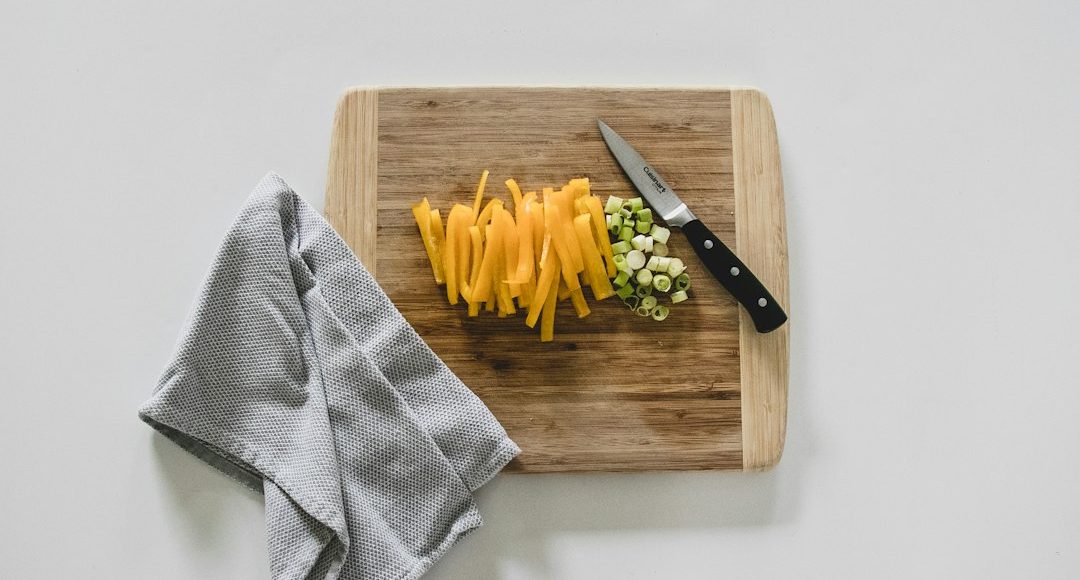
Featured photo: Debby Hudson via Unsplash.