SHUPA DIET / THE PRACTICAL EDIT
Five Days of Fridge-First Meal Planning
Follow a fictional household through actual quantities, preparation dates, a freezer decision and a transparent lunch-cost comparison.
Explore the guide
On this page
- Five days of fridge-first meal planning: a realistic leftover and grocery case study.
- Our deliberately fictional starting inventory
- Why this is a storage problem before it is a recipe problem
- A five-day plan with quantities that add up
- Four decisions before the next shopping trip
- Four lunch prices: calculation versus real-world value
- Your own four-row inventory worksheet
- Three common mistakes that matter more than a pretty menu
- Questions to check before repeating the plan
- Official references and transparent authorship
Five days of fridge-first meal planning: a realistic leftover and grocery case study.
Follow a fictional household through actual quantities, preparation dates, a freezer decision and a transparent lunch-cost comparison.
All prices and household events are illustrative, not a record of groceries we purchased or meals we cooked.
Our deliberately fictional starting inventory
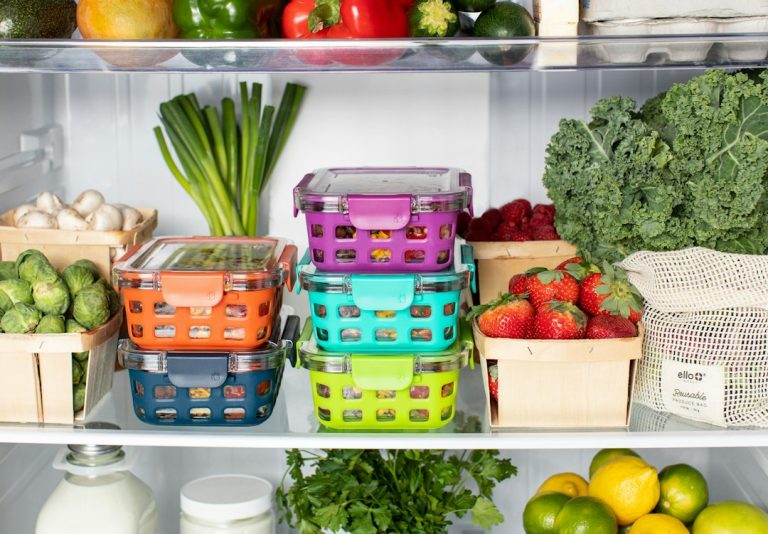
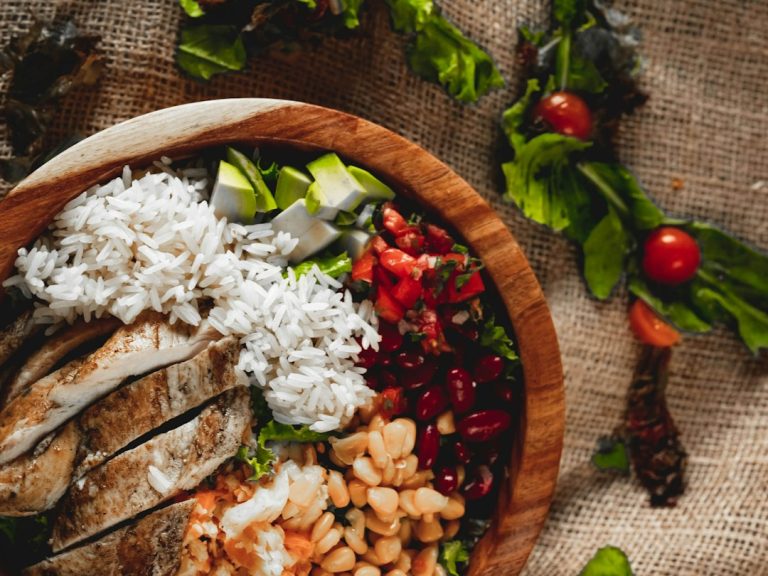
Two adults work unpredictable weekday shifts. On Sunday they prepare four portions of a cooked vegetable-and-bean mixture and four portions of cooked rice. Both components were cooled promptly in shallow containers and put in a working refrigerator. They also have uncooked pantry items; these are not assumed to have the same shelf life as cooked food. One adult would normally buy lunch when work gets busy.
Why this is a storage problem before it is a recipe problem
The household should not treat Sunday-prepared cooked leftovers as automatically suitable for Friday. A Friday meal is five days after preparation, beyond the USDA’s typical refrigerator window for properly stored cooked leftovers. Instead, a suitable portion could be frozen promptly while still within appropriate handling guidance. Food left out too long is a different case: it should not be “rescued” by reheating or freezing.
The dates in the plan below are planning checkpoints rather than safety guarantees. A date cannot tell us the refrigerator temperature, how long a dish sat out or whether anything was contaminated. For details, consult the meal-prep safety guide and our printable batch-label planner.
A five-day plan with quantities that add up
| Day | Use or store | Remaining cooked portions | Why this decision matters |
|---|---|---|---|
| Sunday / day 0 | Prepare and chill 4 portions each of rice and vegetable-bean mixture | 4 / 4 | Record the actual preparation date |
| Monday / day 1 | Use 2 combined portions as packed lunches | 2 / 2 | Avoid buying lunches automatically |
| Tuesday / day 2 | Use 1 combined portion; promptly freeze the final suitable portion | 0 refrigerated; 1 + 1 frozen | Do not leave the remaining cooked food in the fridge until Friday |
| Wednesday / day 3 | Choose other ingredients already at home | 1 + 1 frozen | Check the pantry before adding groceries |
| Thursday / day 4 | Prepare a fresh meal with appropriate storage | 1 + 1 frozen | Do not extend a general storage window to complete a plan |
| Friday / day 5 | If suitable, correctly thaw and reheat the frozen portion | 0 after use | Freezing requires safe initial handling and appropriate thawing |
This sequence is just one plausible way to use four combined portions. It makes no claim about the nutritional adequacy of a given recipe, and it deliberately does not recommend quantities for medical conditions. Substitute foods and portions based on your household and professional advice where needed.
Four decisions before the next shopping trip
Four lunch prices: calculation versus real-world value
Suppose the made-up home preparation has an ingredient allocation of $2.40 per combined portion. Four portions represent $9.60 of allocated ingredients. If four comparable bought lunches were hypothetically priced at $7.00 each, they would total $28.00. The arithmetic difference would be $18.40.
This does not prove a household saved $18.40. The figures ignore shopping trips, cooking time, electricity, portion differences, packaging, taxes, fees and food that goes unused. Money spent on groceries already purchased also cannot be “unspent.” The useful comparison is the decision made before the next purchase, accounting for actual portions and waste risk. Use your own numbers in our recipe cost calculator instead of treating the invented prices as current market data.
Option A: The lowest unit price
A larger pack looks cheap per 100 g, but half may go unused. Its apparent unit-price advantage can disappear if you do not have an appropriate meal or storage plan.
Option B: The best usable amount
A smaller pack may have a slightly higher unit price yet fit the meals you will actually prepare. Compare total cost, usable portions, storage needs and your capacity to cook.
Your own four-row inventory worksheet
Write the dates and handling history yourself. Leave uncertain information clearly marked instead of inventing a use-by date.
| Item / batch | Quantity now | Preparation and storage notes | Next action |
|---|---|---|---|
| ______________ | __________ | __________________________ | ___________________ |
| ______________ | __________ | __________________________ | ___________________ |
| ______________ | __________ | __________________________ | ___________________ |
| ______________ | __________ | __________________________ | ___________________ |
Three common mistakes that matter more than a pretty menu
1. Treating a calendar label as permission to eat
No date label can verify food temperature history or the absence of harmful bacteria. If food was mishandled, follow USDA discard guidance.
2. Mixing up “Best By” and leftover safety
Commercial package quality dates and cooked leftovers are different issues. Use our food date decision guide to keep them separate.
3. Calling hypothetical arithmetic proven savings
A four-meal price model demonstrates a formula, not measured savings in a particular city. Total costs and decisions differ by person, shop, ingredients and storage conditions.
Questions to check before repeating the plan
What if refrigerated food smells fine on day five?
Smell and appearance do not reliably show whether food contains harmful organisms. Follow official food-specific guidance and the actual handling history, not this example’s calendar.
Can freezing repair a meal that spent hours unrefrigerated?
No. Freezing does not reverse unsafe prior handling. The official safety rules are the starting point.
Is this an individualized eating or weight-loss plan?
No. It is a household inventory, safety and cost reasoning example. It does not calculate nutrition needs or prescribe any diet or treatment.
Official references and transparent authorship
Original, fictional worked example prepared by Shupa Diet Editorial, October 2026. The site did not conduct the illustrated grocery transaction, laboratory tests or a real cooking experiment. Photo credits: THLT LCX, Ello and Joe Boshra via Unsplash, listed on our image credits page. Report errors through Contact.