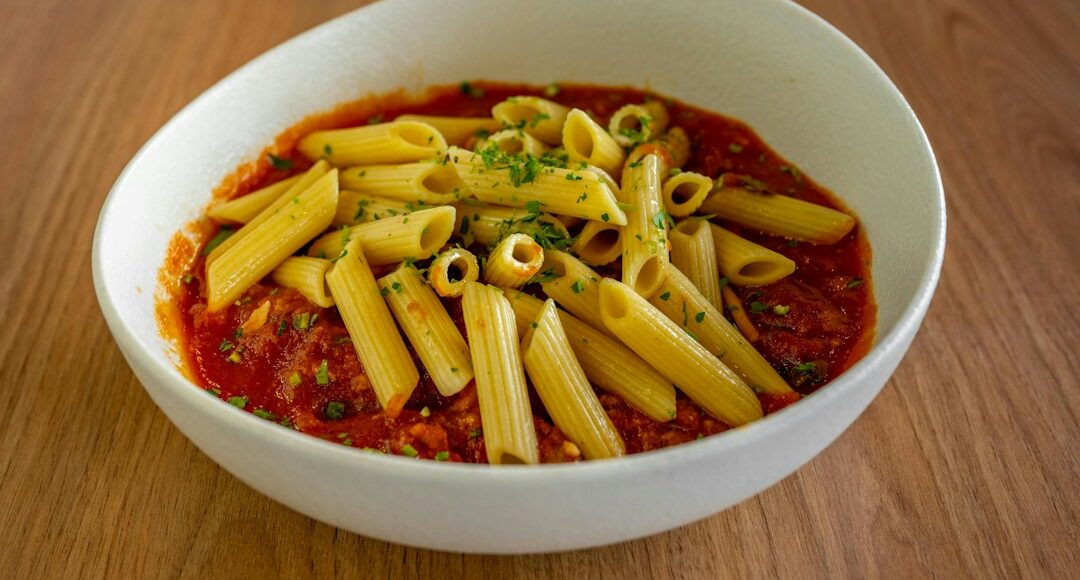
Why Sauce Slides Off Pasta: A Reserved Cooking-Water Side-by-Side Test
When pasta seems slippery and the sauce pools at the bottom of the bowl, the issue may not be the sauce recipe. Pasta releases starch during cooking; keeping some starchy cooking water and finishing the pasta in the sauce can change how it coats the noodles. This guide turns that technique into an easy kitchen comparison, without claiming a universal result from an unperformed experiment.
Make one batch, compare two finishes
You need about 160 g of dry pasta, an appropriately sized pot, enough sauce for two small portions, a heat-safe cup and two serving bowls. Follow the pasta package’s water and cooking directions. Prepare a simple tomato sauce or another familiar sauce and divide it into two similar portions before you start.
What stays the same?
| Variable | Keep consistent |
|---|---|
| Pasta | Same shape, brand and batch |
| Sauce | Same sauce, equal approximate amounts |
| Serving size | Divide the cooked pasta evenly |
| Tasting | Compare soon after cooking, at similar temperatures |
| Difference | Only the finishing method |
Two methods to compare
- Before draining, save some hot cooking water in a heat-safe container. Be careful of steam and splashing.
- Drain the pasta using a stable colander without rinsing it. Divide it into two similar portions.
- Bowl A: place pasta in a bowl and spoon the prepared sauce over it without additional cooking.
- Bowl B: add pasta to a pan with the same sauce and a small splash of reserved cooking water. Toss gently over suitable heat just long enough to coat and finish the pasta.
- Observe how much sauce remains in the serving bowl after a few bites, how evenly the noodles are coated and whether one tastes too watery or too dry.
Because Bowl B has an extra heating step, the two methods are not a perfect laboratory comparison; they reflect two real-world serving workflows. Do not claim that one method always wins. Record your own preference.
Result log
| Observation | Bowl A | Bowl B |
|---|---|---|
| Even coating (1–5) | ___ | ___ |
| Liquid pooling (none / some / much) | ___ | ___ |
| Noodle firmness | ___ | ___ |
| Overall preference | ___ | ___ |
Should you rinse pasta?
For hot pasta served with sauce, rinsing generally removes surface starch that can help sauce adhere. For specialized cold recipes, a particular manufacturer’s instructions may differ, so consider the intended dish. Rinsing is not a food-safety substitute for proper cooking or refrigeration.
What if the pasta water was salty?
Reserved cooking water contains whatever salt was added during boiling. Add it gradually and taste before adding additional salt. Anyone following a medically prescribed sodium restriction should consider the overall recipe and seek individualized professional guidance. Avoid pouring a large quantity of cooking water into sauce all at once; you can add more, but cannot easily remove it.
Make the comparison repeatable in your own kitchen
There are two separate questions here: whether a sauce coats pasta evenly and whether the pasta stays at the texture you enjoy. Write down both instead of relying only on which bowl looks more attractive. The outcomes below are a measurement plan, not invented taste-test results.
| Variable | What to record | Why it matters |
|---|---|---|
| Dry pasta weight | e.g. 160 g total, divided after draining | Identifies the starting amount |
| Sauce per bowl | e.g. two measured 70 g portions | Prevents extra sauce from favoring one result |
| Reserved water in pan B | e.g. 15 mL initially, then record any extra added | Reveals whether the sauce was diluted too far |
| Time spent finishing B | Actual seconds at your stove | Longer heating changes texture as well as coating |
| Observed coating | 1–5 based on visible distribution | Keeps appearance separate from preference |
Example arithmetic, not test findings: if 140 g of prepared sauce is divided equally, each bowl begins with 70 g. If the pan receives 15 mL water, record the added liquid separately; the weight of the finished sauce is not simply a fixed ratio because some water can evaporate. Keep the sample and timing consistent enough for a useful household comparison without claiming laboratory precision.
The FDA’s nutrition serving-size explanation is useful when reading your pasta and sauce packages: a labeled serving is the quantity used to report nutrients, not a prescription for the portion you must eat. Our nutrition-label workbook demonstrates the arithmetic.
Three failure modes and fixes
- Sauce becomes watery: add less cooking water next time and toss until the mixture reaches the preferred consistency.
- Pasta becomes too soft: start checking doneness earlier if you plan to finish it in hot sauce.
- Pasta sticks while cooking: stir early and use an appropriate pot; pouring oil into the boiling water is not the best fix.
FAQ
Is cooking water the same as adding flour?
No. It contains dissolved and suspended starch released from pasta and works in a different concentration and setting than adding dry flour directly.
Will this make any sauce creamy?
Not necessarily. Sauce composition and mixing matter. Aim for better coating, not a guaranteed restaurant-style result.
Source: Barilla: practical pasta-water and sauce-finishing guidance. For a different cooking-timeline issue, see our vegetable start-time planner.
Editorial note: The two-bowl worksheet is an original at-home method; sample results are intentionally left blank.