When Should You Reorder Pantry Staples? A Use-Rate Worksheet
SHUPA DIET / THE PRACTICAL EDIT
When Should You Reorder Pantry Staples? A Use-Rate Worksheet
A pantry item can run out even when a shopping list says “buy soon.” This worksheet turns observed use, delivery time and a small buffer into a reorder trigger you can write on the container or save in a calendar.
Explore the guide
A pantry item can run out even when a shopping list says “buy soon.” This worksheet turns observed use, delivery time and a small buffer into a reorder trigger you can write on the container or save in a calendar.
1. Use four numbers, not a guess
Observed use
Count how many units left the pantry during a representative period. Divide units used by observed days.
Lead time
Count calendar days from placing an order to when it is normally usable at home, not just the seller’s dispatch time.
Buffer days
Add a modest cushion for normal variation. A buffer is not permission to ignore limited storage or product dates.
Order multiple
Round the suggested order to the pack, case or minimum quantity you can actually buy.
2. Reorder-point calculator
One shelf-stable item
This tool runs in your browser. It does not save, send, order, schedule a reminder or check package dates. Use one currency consistently.
3. Worked example: cans used unevenly through the month
Fictional example: a household used 12 cans in 30 days, so observed use is 12 ÷ 30 = 0.40 can per day. Delivery normally takes five days and the household chooses a seven-day buffer.
Reorder point = 0.40 × (5 + 7) = 4.80 cans. Because cans are whole units, check the stock at 5 cans or fewer. With 8 cans on hand, time to the trigger is (8 − 4.8) ÷ 0.4 = 8 days.
If the order is placed at the trigger, expected stock on arrival is 4.8 − (0.4 × 5) = 2.8 cans, the planned seven-day buffer. A 30-day target needs 12 cans after delivery. The gap is 12 − 2.8 = 9.2 cans; if the item is sold in six-can multiples, round up to 12 cans. At 1.80 each plus 4 delivery, the fictional order costs 25.60.
Do not hide uncertainty
If the observation period included guests, travel, a temporary diet or a stockout, write that beside the rate. Recalculate after a more typical period instead of adding a huge buffer that fills the pantry.
4. When this method needs an adjustment
| Situation | Adjustment | Do not assume |
|---|---|---|
| Highly irregular use | Observe longer or use the higher of two recent representative periods. | One busy week predicts the whole year. |
| Seasonal item | Use a season-specific rate and stop reminders when the season ends. | Last month's rate remains useful. |
| Limited storage | Cap the target days and compare smaller order multiples. | Lower unit price makes unusable stock economical. |
| Unreliable lead time | Record actual order-to-arrival days for several orders before raising the buffer. | The seller's best-case dispatch estimate is the lead time. |
| Easy substitute | List the substitute and decide whether a stockout is genuinely costly. | Every staple needs the same buffer. |
| Perishable or opened food | Do not use this worksheet alone; check the package and food-specific storage guidance. | A mathematical buffer equals safe storage time. |
5. Set up a low-maintenance pantry card
- Choose a unit you can count consistently: one can, one unopened packet, or one carton.
- Write the observation dates and units used. Include zero-use days.
- Use the actual recent order-to-arrival time, including weekends if they affect delivery.
- Run the calculator and write “reorder at ___ units” on a removable label.
- Put the review date beside the trigger. Recalculate when household size, recipe use, pack size or supplier changes.
- Keep the order receipt. Compare the predicted lead time and quantity with what actually happened.
6. Storage dates remain a separate decision
The USDA-developed FoodKeeper provides product-specific guidance for storing food and beverages and includes pantry, refrigerator and freezer timelines. Use it or the current package instructions to check whether the planned quantity fits a realistic storage window. This calculator deliberately does not convert a best-by date or storage recommendation into a safety guarantee.
Related Shupa Diet tools
- A Flexible Grocery-List Blueprint
- Grocery Unit-Price Comparison Calculator
- Bulk Pack or Small Pack? Cost per Used Portion
- Best By vs. Food Safety
Source and photo note
- FoodSafety.gov: FoodKeeper App (checked October 23, 2026).
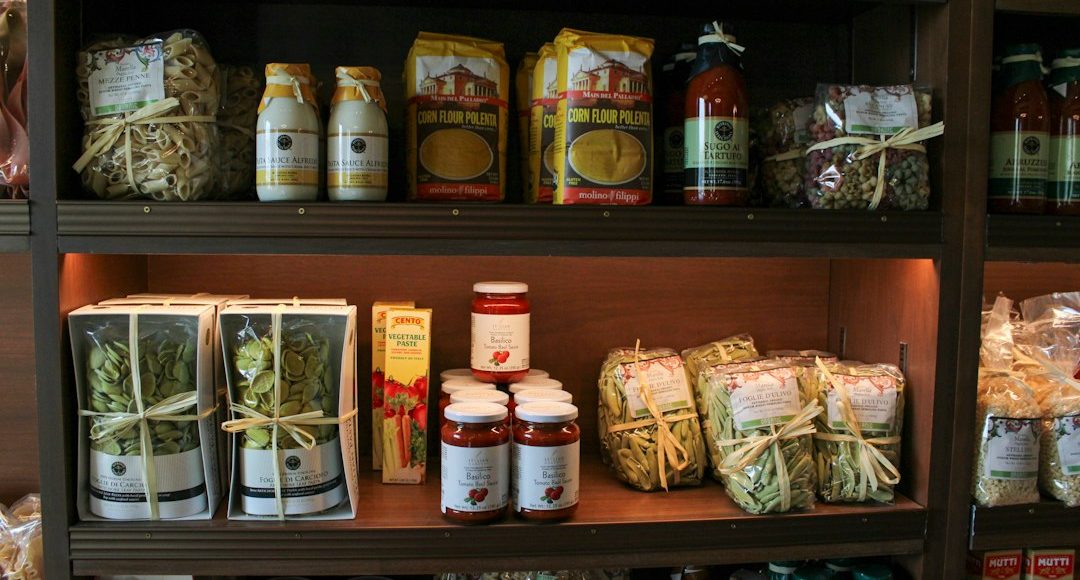
Illustrative pantry photo by shawn kim on Unsplash. The pictured products are not reviewed, endorsed or represented as used by Shupa.