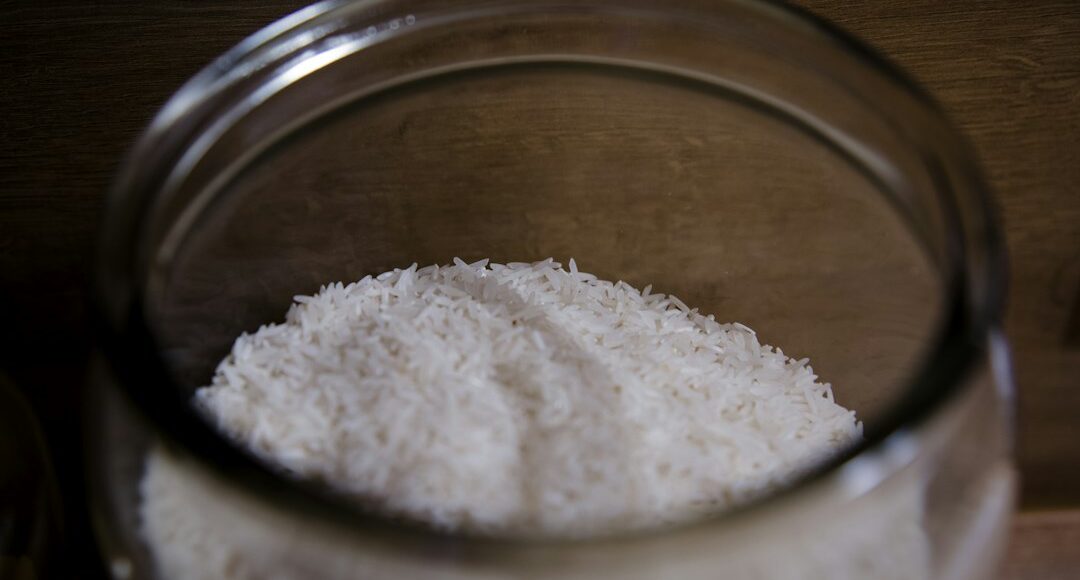
Does Rinsing Rice Remove Arsenic? What the FDA Actually Found
SHUPA RESEARCH NOTE / FOOD CONTAMINANTS
“Wash rice three times to remove arsenic” and “never rinse because you’ll lose nutrients” are both oversimplifications. The FDA distinguishes rinsing from cooking in excess water and draining. Those methods can affect arsenic and nutrients differently. This article explains the tradeoff, not a guarantee that one bowl of rice is risk-free.
Why is arsenic discussed with rice?
Arsenic occurs naturally in the environment and can also be associated with contamination. Rice plants tend to absorb it more readily than many other crops. The FDA monitors arsenic in food, with particular attention to exposure patterns and infants. Arsenic exposure is not the same as immediate food poisoning, and this page cannot assess a particular bag of rice without laboratory testing.
Two kitchen actions that answer different questions
Rinsing before cooking
A quick or repeated rinse can wash away surface starch and change cooking texture. According to FDA research, rinsing has a minimal effect on arsenic in cooked rice. It can also remove some added nutrients from enriched rice.
Excess-water cooking
Cooking rice similarly to pasta—with about 6 to 10 parts water to 1 part rice, then draining—reduced inorganic arsenic by roughly 40–60% in FDA-cited studies, depending on rice type. This is an experimental range, not a result you can assume for every kitchen.
Primary reference: FDA — What You Can Do to Limit Exposure to Arsenic.
The overlooked tradeoff: enrichment nutrients
The FDA also reports that excess-water cooking can reduce folate, iron, niacin and thiamine by 50–70% in certain enriched polished and parboiled rice. Many readers focus only on the arsenic reduction while omitting that second finding. Ordinary unenriched rice, enriched rice and infant rice cereals are not interchangeable categories. Check the actual product and dietary circumstances rather than assuming one preparation is universally better.
| Action | What the source supports | What it does not support |
|---|---|---|
| Rinsing raw rice | Minimal effect on arsenic in the FDA research; some nutrients can be lost | That repeated rinsing eliminates a chemical contaminant |
| Excess water and draining | Arsenic reduction in studied rice types, with a substantial nutrient-loss tradeoff for some enriched rice | That every batch is now arsenic-free or nutritionally equivalent |
| Mixing grain varieties | Greater dietary diversity can reduce reliance on one grain source | That switching one meal cures or prevents a disease |
| Inspecting an individual bag | Product labeling gives brand, type and enrichment information | That color or an ordinary label reveals actual arsenic concentration |
What should an ordinary home cook do?
- Know your rice. Check whether the product is enriched or parboiled and whether any special cooking or nutrition instructions are on the bag.
- Keep different aims separate. Rinsing for the texture you prefer is different from trying to lower a contaminant. Don’t claim a rinse count is a tested detox protocol.
- Consider the whole diet. Rice can be part of a balanced diet. The FDA discusses using different grain sources rather than relying on rice products exclusively, particularly for young children.
- Use the excess-water method thoughtfully. If you choose it, understand the nutrient tradeoff and follow safe food preparation methods for that variety.
- Handle cooked rice safely. Cooling and refrigeration matter; arsenic-related preparation and prevention of bacterial growth are different food-safety questions.
Two households, two distinct decisions
Scenario A (fictional): A person wants to know whether a triple rinse can reliably remove inorganic arsenic. The FDA evidence says that rinsing’s impact is minimal, so the person should not treat it as a contaminant-control guarantee. Scenario B: Another household uses enriched rice as a frequent source of added micronutrients. They learn that boiling and draining may reduce certain added nutrients substantially and decide to consider the full dietary impact rather than focusing on one percentage.
Questions people ask
Does brown rice automatically contain less arsenic?
Not necessarily. Levels vary by type and growing conditions, and processing can change the distribution. A label saying “brown” is not a lab result or a safety certificate.
Can I tell whether rice contains arsenic from its color or smell?
No. This is not a contaminant that can be reliably assessed with a home smell, taste or color test.
Should parents stop feeding children rice?
The FDA does not advise avoiding rice entirely. It recommends balanced grain choices, with additional considerations for infants and young children. Discuss individual feeding concerns with a pediatric professional.
Read next
Quality dates versus food-safety decisions
Primary source: U.S. Food and Drug Administration. Original SHUPA explanation, decisions and examples; no rice sample, beverage brand or food was lab-tested by this site. Featured image credit: Luba Ertel / Unsplash (illustrative).