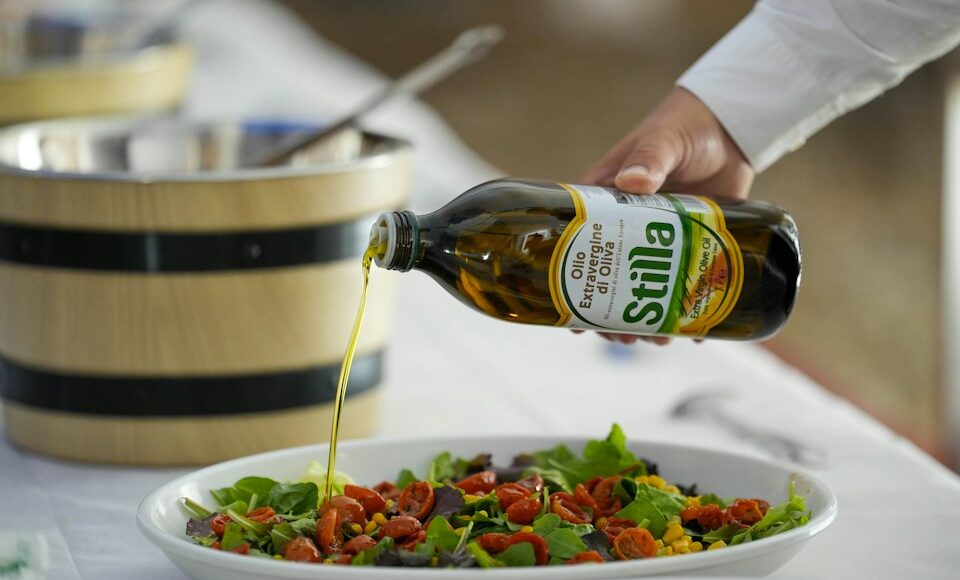
Extra Virgin, Light or Refined Olive Oil? Read the Bottle Before You Buy
OLIVE OIL LABELS · NO SHOPPING HYPE
The word “light” on an olive-oil bottle does not mean a low-calorie oil. Nor does a darker green color prove a bottle is extra virgin. The useful questions are simpler: What is the official grade? How has the oil been processed? What taste do you want? Will you use the bottle while it is still fresh?
Three terms that matter—and one marketing term to question
The International Olive Council (IOC) defines categories based on chemical and sensory criteria. Regulatory labels vary by country, so check the exact lawful designation on the back of the bottle rather than relying only on the large words on the front.
| Words on the label | What they generally mean | What they do not mean |
|---|---|---|
| Extra virgin olive oil | Virgin oil obtained by physical/mechanical methods and meeting the IOC’s extra-virgin chemical and sensory criteria. | That every bottle tastes the same or is automatically fresher than any other bottle on a shelf. |
| Virgin olive oil | Also obtained without refining, with its own IOC category criteria. | That “virgin” and “extra virgin” are interchangeable official grades. |
| Refined olive oil | Olive oil processed through refining to adjust undesired qualities; a distinct grade. Some markets restrict its direct retail designation. | That it must have fewer calories than extra virgin oil. |
| Olive oil (refined + virgin blend) | Under the IOC terminology, a blend of refined olive oil and edible virgin olive oils. | That it is itself an extra-virgin oil. |
| “Light” / “extra light” | In some markets, descriptive language for milder taste or color after refining. | It is not a promise of fewer calories. |
UC Davis Olive Center research guidance explains that “light” describes taste and color, not an energy reduction, and that good extra-virgin oil can also be used for cooking. Whether a particular oil fits a cooking method depends on its condition, heat management and recipe—there is no need to claim all olive oils have identical smoke points.
Five label questions to ask in the supermarket
1. What grade is actually written?
Look for the legal designation: “extra virgin,” “virgin,” or a refined/virgin blend. Avoid inferring the grade solely from fruit pictures, a green tint or the word “premium.”
2. How fresh is the bottle likely to be?
Look for the best-before date and any harvest or bottling information. Dates serve different purposes, and a printed date alone does not certify the oil’s chemical quality.
3. How will you use the oil?
A peppery, fragrant oil may be enjoyable in dressings or as a finish; a milder oil may better suit a recipe where you do not want the oil flavor to dominate. This is a taste decision, not a health ranking.
4. What does the package protect against?
Light, heat and air can degrade freshness. Consider a bottle that closes well, can be stored in a dark cupboard and is not left near a hot stove.
5. Is the bottle size realistic?
A giant bottle can have a better shelf price while still being poor value if you use little oil and leave it exposed for months. Compare how quickly your household actually finishes a bottle.
Bonus: Is the seller claiming a “fridge purity test”?
UC Davis reports that refrigerating olive oil and watching it cloud or solidify is not a reliable test of purity or extra-virgin grade.
Three fictional shelves, three different decisions
| Scenario | Reader’s actual need | A more useful decision than “which is healthiest?” |
|---|---|---|
| Aromatic dressing tonight | Small amount for a salad or final drizzle | Pick a verified extra-virgin grade with a flavor profile you like and a bottle size you’ll finish. |
| Regular neutral-tasting preparation | Less assertive olive flavor | Read whether the oil is a refined/virgin blend; do not mistake “light” for a reduced-calorie product. |
| Rare use, large discounted bottle | Good price but infrequent cooking | Price is not the only factor; freshness and storage conditions may favor a smaller bottle. |
Storage: one practical change beats a complicated ritual
- Keep olive oil in a cool, dark cupboard away from the stove and sunny windows.
- Close the bottle tightly after every use. A decorative open spout that allows prolonged air exposure may be a poor long-term storage choice.
- Use an appropriate, clean dispenser if transferring, and label it so you remember which oil it contains.
- Buy enough for your normal cooking pattern rather than stockpiling bottles only because the price per liter looks low.
- If aroma or flavor has deteriorated noticeably, do not try to “fix” the oil with extra herbs; follow safe storage and shelf-life guidance.
Olive oil is an energy-dense cooking fat regardless of grade. Grade and taste do not replace reading the Nutrition Facts label, considering portions or consulting a clinician about your own dietary needs.
Frequently asked questions
Is extra-virgin olive oil only for uncooked salad?
No. UC Davis explains that suitable extra-virgin olive oil can be used in cooking as well. Use reasonable heat and the actual manufacturer’s guidance for the oil and recipe.
Does “light” mean half the calories?
No. It generally refers to milder taste or color, not reduced energy. Check the actual Nutrition Facts label and serving size.
Will olive oil turning solid in a fridge prove it is real?
No. UC Davis says this “fridge test” cannot reliably establish oil quality or purity.
Why can two extra-virgin oils taste different?
Olive variety, harvest, processing, storage and age can affect aroma and flavor even when both meet the same grade definition.
Continue reading
How to compare nutrition labels fairly
This SHUPA article and original examples were assembled for reader education. They do not represent real-world testing, medical certification or paid product promotion. Illustrative featured image: Alfonso Scarpa, Unsplash.