
Target Your Back Muscles! – Fitness Volt
Target Your Back Muscles! – Fitness Volt
Neither a close grip nor a wide grip is a proven universal winner for lat growth. Choose a handle and width that let you perform controlled, comfortable repetitions, then track progress with that setup. A narrow neutral V-handle and a narrow overhand grip are different variations; evidence about one does not automatically apply to the other.
This guide compares the narrow neutral-grip pulldown commonly done with a V-handle and a wider overhand pulldown. For the complete machine setup, see our existing lat-pulldown technique guide.
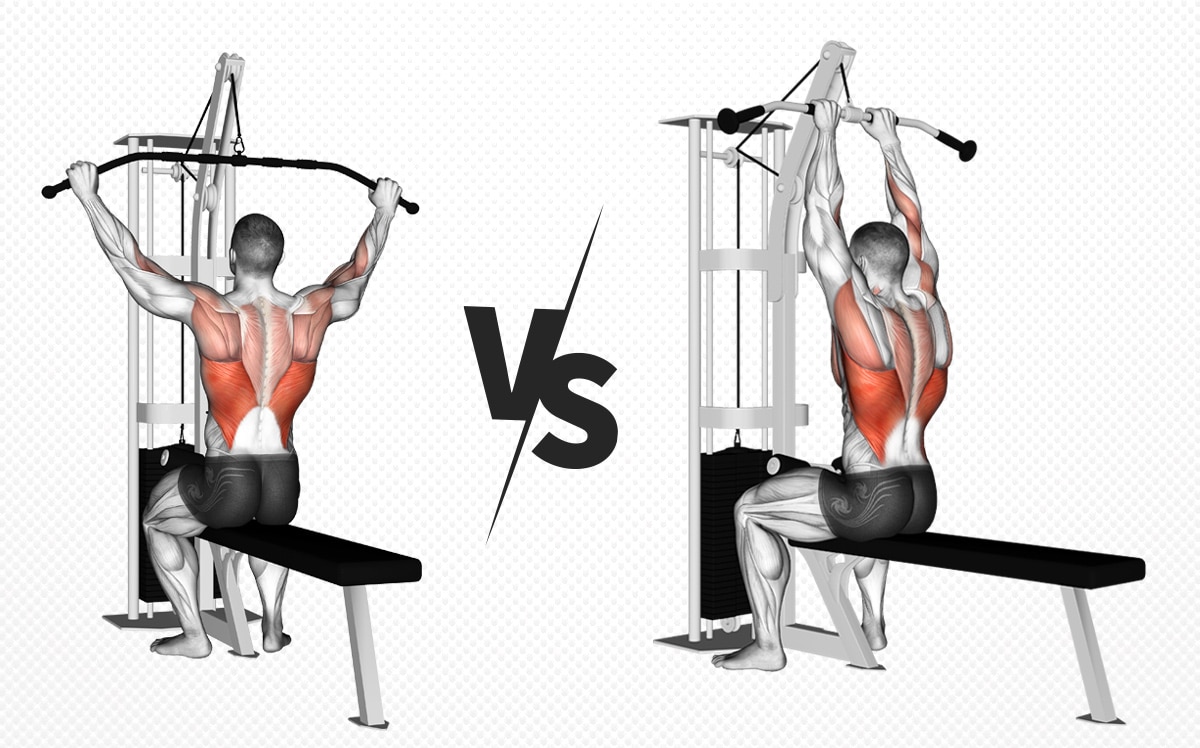
The featured image compares hand spacing on a bar. The close-grip animation below uses a different attachment: a neutral V-handle.
Grip width and hand orientation are separate choices
Width is the distance between your hands. Orientation describes which way your palms face: overhand (pronated), underhand (supinated), or toward each other (neutral). Changing from a wide bar to a narrow V-handle changes both variables.
“Wide” also needs a definition. A distance described as wide in a gym article may be called medium in a study. Record your actual hand position when comparing sessions instead of relying on the attachment’s name.
What the grip-width study actually tested
Andersen and colleagues studied 15 men using three pronated widths: 1, 1.5, and 2 times biacromial breadth, the distance between the bony shoulder landmarks. They measured six-repetition-maximum loads and muscle electrical activity (EMG), not months of growth or injury rates. A neutral V-handle was not tested. [1]
Average six-repetition loads were 80.3 kg for narrow, 80.0 kg for medium, and 77.3 kg for wide. Whole-movement lat, trapezius, and infraspinatus EMG was similar between widths, although some phase-specific differences occurred.
These results do not establish an upper-lat versus lower-lat growth advantage, prove that neutral grips prevent injuries, or predict a fixed percentage loading advantage for you. The authors discussed possible hypertrophy implications, but hypertrophy was not an outcome they measured.
Close-grip lat pulldowns
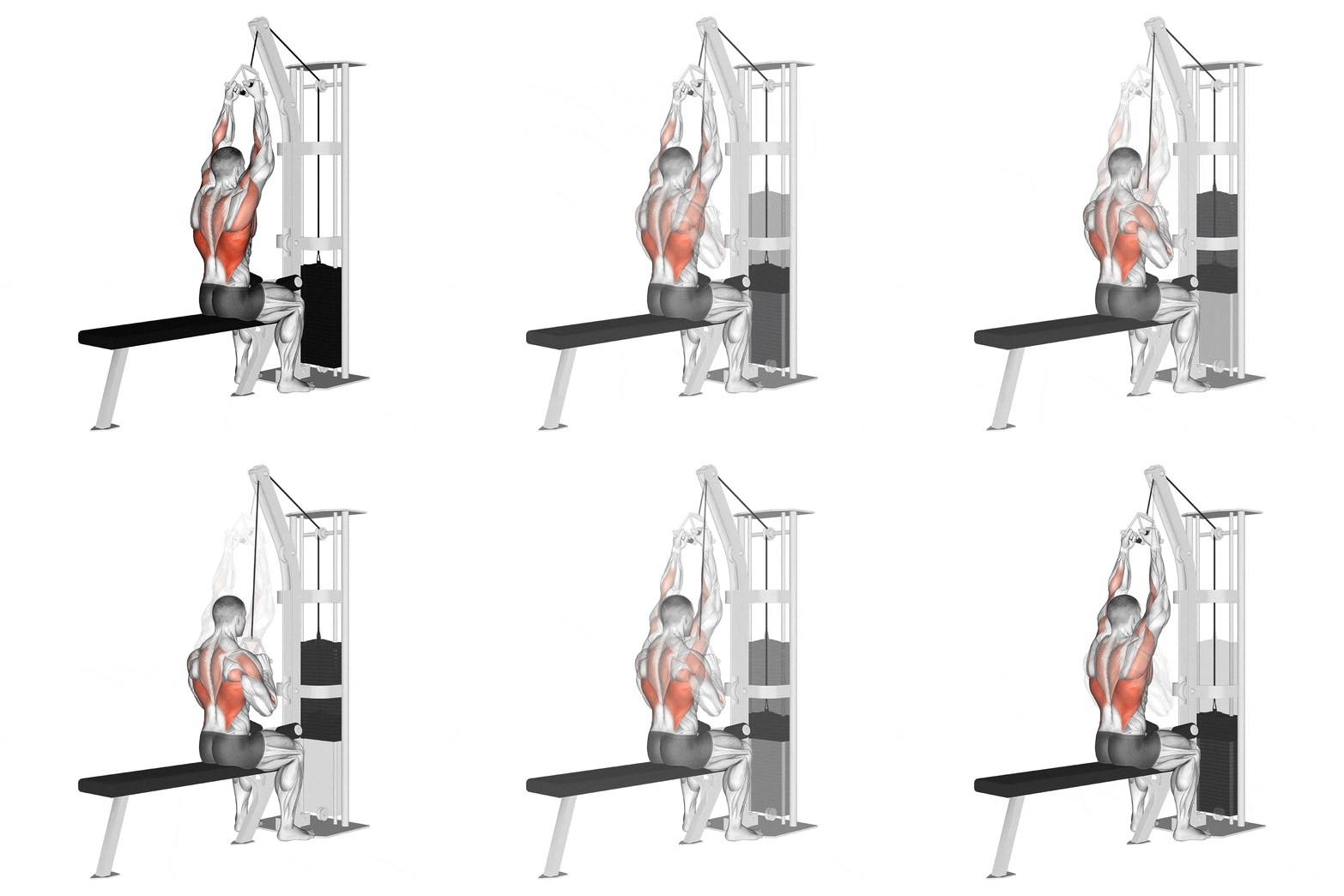
With a narrow neutral handle, your palms face each other and your elbows generally travel in front of your torso as you pull down. Some lifters prefer this position; others prefer a bar. Comfort is an individual response, not proof that one grip protects everyone’s joints.
Pull the handle toward the front of your upper torso without swinging backward to finish the repetition. The endpoint depends on the handle, your proportions, and the range you can control. You do not need to force the handle to a prescribed point on your chest.
You can also use a narrow overhand or underhand grip, but label it accurately in your training log. Do not assume these setups will produce the same load, elbow path, or range of motion.
Wide-grip lat pulldowns
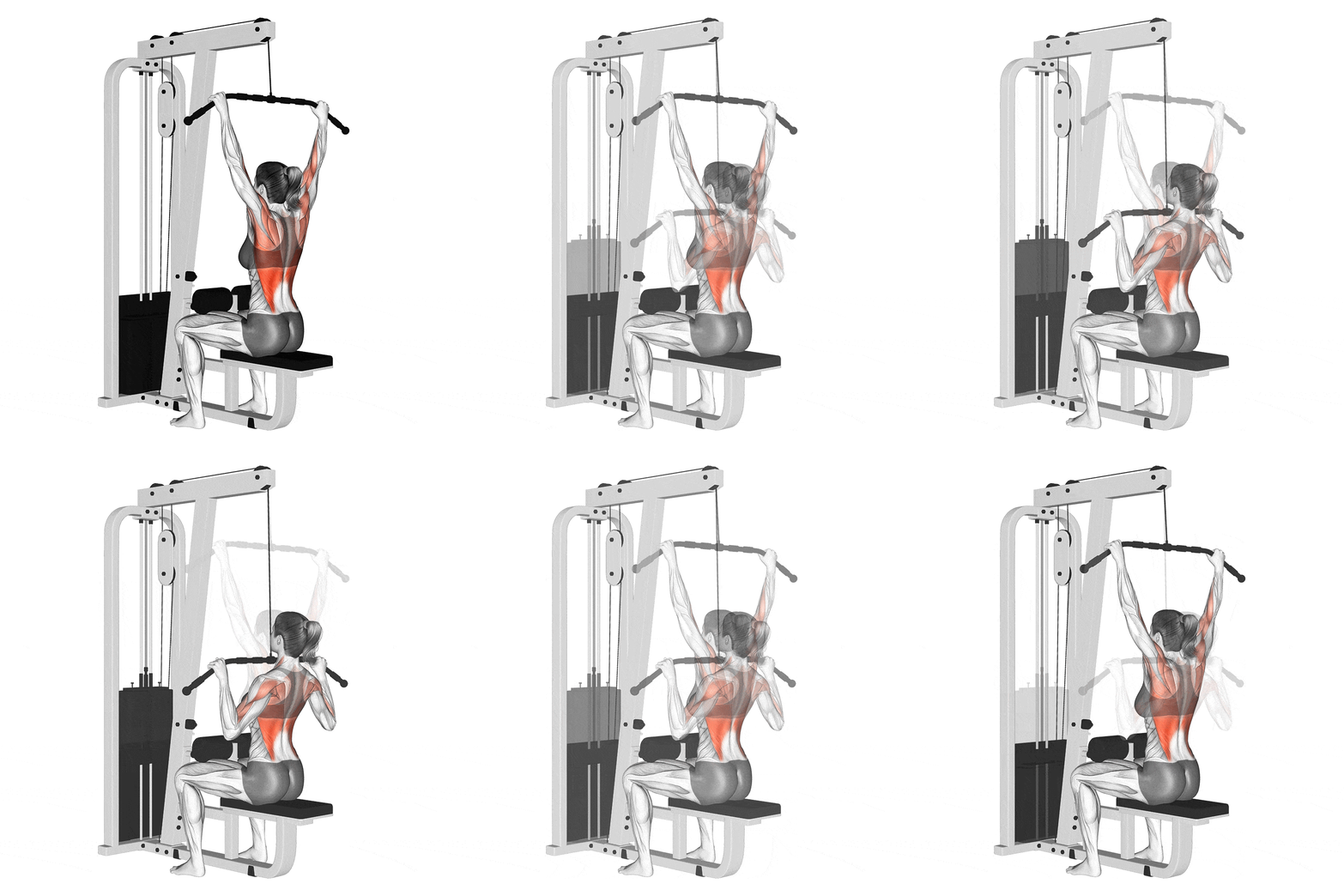
An overhand grip wider than shoulder breadth usually places the elbows farther out to the sides. As you pull down, your upper arms move toward your torso. You do not need to grip the extreme ends of the bar.
Start with a manageable load and test a comfortable hand position. Keep the bar in front of your head, and stop the pull before you need to roll your shoulders forward or swing your torso to move it farther. Let the return remain controlled rather than allowing the stack to yank your arms overhead.
Close grip versus wide grip: practical differences
| Question | Close neutral grip | Wide overhand grip |
|---|---|---|
| Hand position | Hands close together, palms facing each other. | Hands farther apart, palms facing away. |
| Elbow path | Generally travels more in front of the torso. | Generally travels farther out to the sides. |
| Range of motion | Depends on the attachment, anatomy, and technique. No universal 80-degree rule. | Depends on the same factors. No universal 60-degree rule. |
| Working load | Establish it with this handle and controlled repetitions. | Retest your working load when changing width; do not assume the same stack setting is appropriate. |
| Comfort and learning | A reasonable option to try, not a guaranteed beginner or rehabilitation choice. | Also an option if the movement is comfortable and controllable. |
Both are compound pulling exercises. The lats move the upper arms, elbow flexors help bend the elbows, the forearms maintain your grip, and muscles around the shoulder blades and torso help control position. A different elbow path is not enough to claim that one variation selectively builds a particular strip of your lats.
How to perform a controlled lat pulldown
- Select a load you can control. Set the thigh pads to hold you securely with your feet supported.
- Take a secure thumbs-around grip on the chosen attachment, sit down, and brace your torso. Keep your trunk position comfortable and repeatable; do not force a large lower-back arch.
- Pull the attachment down in front of you by bringing your elbows toward your torso. Avoid jerking the weight or turning the movement into a backward swing.
- Stop at a controlled endpoint rather than forcing the handle to touch your chest. Return smoothly, allowing your arms and shoulder blades to move naturally through a comfortable range.
- End the set when you cannot maintain control or your grip begins to slip. Return the stack under control before releasing or changing the handle.
Use the machine’s adjustment and attachment instructions. Pain is a reason to stop and reassess, not to push farther because a grip is supposedly “joint-friendly.” Persistent symptoms need individual advice from an appropriate professional.
Chalk may help with a slipping grip where the gym permits it; see our gym chalk guide. It does not make an otherwise unmanageable load appropriate.
Which grip should you choose?
For muscle-building training
Start with the variation you can perform consistently. Record the attachment, hand spacing, load, repetitions, and how the movement feels. Progress that setup before changing several variables at once. Feeling a stronger local muscle sensation is useful feedback, but it is not a measurement of future muscle growth.
For strength tracking
Strength is specific to the tested movement. More weight on a different attachment is not necessarily progress on the original exercise. Compare like with like: the same machine, handle, hand spacing, range, and technique.
For beginners
A narrow neutral handle is one option to try, not a mandatory starting point. A medium overhand grip is another. Choose a light enough load to learn the setup and ask a coach to check your movement if you are unsure.
For shoulder or elbow comfort
Try a different width or orientation with a lighter load if a position feels awkward. Do not treat a grip change as a diagnosis or treatment. If no setup is comfortable, stop the exercise and get individual guidance.
How to fit pulldowns into a back workout
You can use one pulldown variation in a session, alternate variations between sessions, or include both if they fit your overall program. Doing both is optional; it is not necessary simply because two attachments are available.
For a straightforward session, choose one vertical pull and a suitable row rather than automatically adding a second pulldown plus several other back exercises. Set the number of working sets according to your experience, other training, and recovery. Do not add an entire extra block of work just to compare grips.
If you change attachments between sets, return the stack fully, release the load, and reset. Do not switch your grip on a moving or loaded bar as a fatigue technique. There is no requirement to perform repeated drop sets to failure.
Other pulling exercises to consider
These options serve different tasks; they are not all direct substitutes for a vertical pulldown:
- Pull-ups: An overhand bodyweight vertical pull. Assistance can make the movement more manageable; added load is an option only when appropriate to your ability.
- Chin-ups: An underhand bodyweight vertical pull. This is a different hand orientation, not the same movement as a neutral V-handle pulldown.
- Straight-arm pulldowns: A shoulder-extension exercise with relatively little elbow movement. It changes the task rather than reproducing a bent-arm pulldown.
- Seated rows: A horizontal pull that can complement vertical pulling. Choose a handle and torso position you can control.
- Deadlifts: A hip-hinge lift in which the upper body also helps support the load. It is not a like-for-like replacement for the shoulder and elbow movement of a pulldown.
For the differences between bodyweight vertical pulls, see pull-ups versus chin-ups. For a broader exercise selection, use the existing back exercise guide. You do not need to perform every movement listed here.
Close-grip versus wide-grip pulldown FAQs
What is the main difference?
In this comparison, the close version uses a narrow neutral handle and the wide version uses an overhand bar. Both width and hand orientation change. The comparison table above summarizes the practical differences without assigning a universal winner.
Which grip is best for beginners?
The one the person can learn and control comfortably. Try a manageable load with a neutral handle or a medium overhand grip. There is no need to begin at the widest bar position.
Which grip is easier on the shoulders?
Individual comfort varies. Neither grip has a blanket injury-prevention guarantee. Adjust the load and setup; do not continue through pain because an article labels the grip safer.
Can I use both in the same workout?
Yes, if both fit the planned amount of training. Alternatively, use one variation for a period of consistent tracking or alternate between sessions. You do not have to put wide first or assume you will be stronger with the neutral handle.
How do pulldowns fit into a full back routine?
They provide a vertical-pulling option. A suitable row can add horizontal pulling, while other work depends on your goals and current program. A six-exercise back session is not a prerequisite for progress.
How often should I train them?
Choose a frequency that fits your overall training and recovery. There is no grip-specific rule that everyone must train pulldowns twice weekly or wait exactly three days. Reduce or redistribute work if fatigue prevents controlled performance.
What can I do instead?
Assisted pull-ups or chin-ups can provide another vertical pull. Rows and straight-arm pulldowns change the movement demands. Select according to the equipment available and the movement you are trying to train, rather than treating all back exercises as interchangeable.
Reference
1. Andersen V, Fimland MS, Wiik E, Skoglund A, Saeterbakken AH. Effects of grip width on muscle strength and activation in the lat pull-down. J Strength Cond Res. 2014;28(4):1135–1142. doi:10.1097/JSC.0000000000000232.